Doylestown & Central Bucks
Wine Cellar · Doylestown

Wine cellars in Doylestown and Central Bucks.

A cellar has one job: hold steady temperature and humidity for years. We build the envelope and the cooling first, then the racking, glass and lighting that show the collection off.

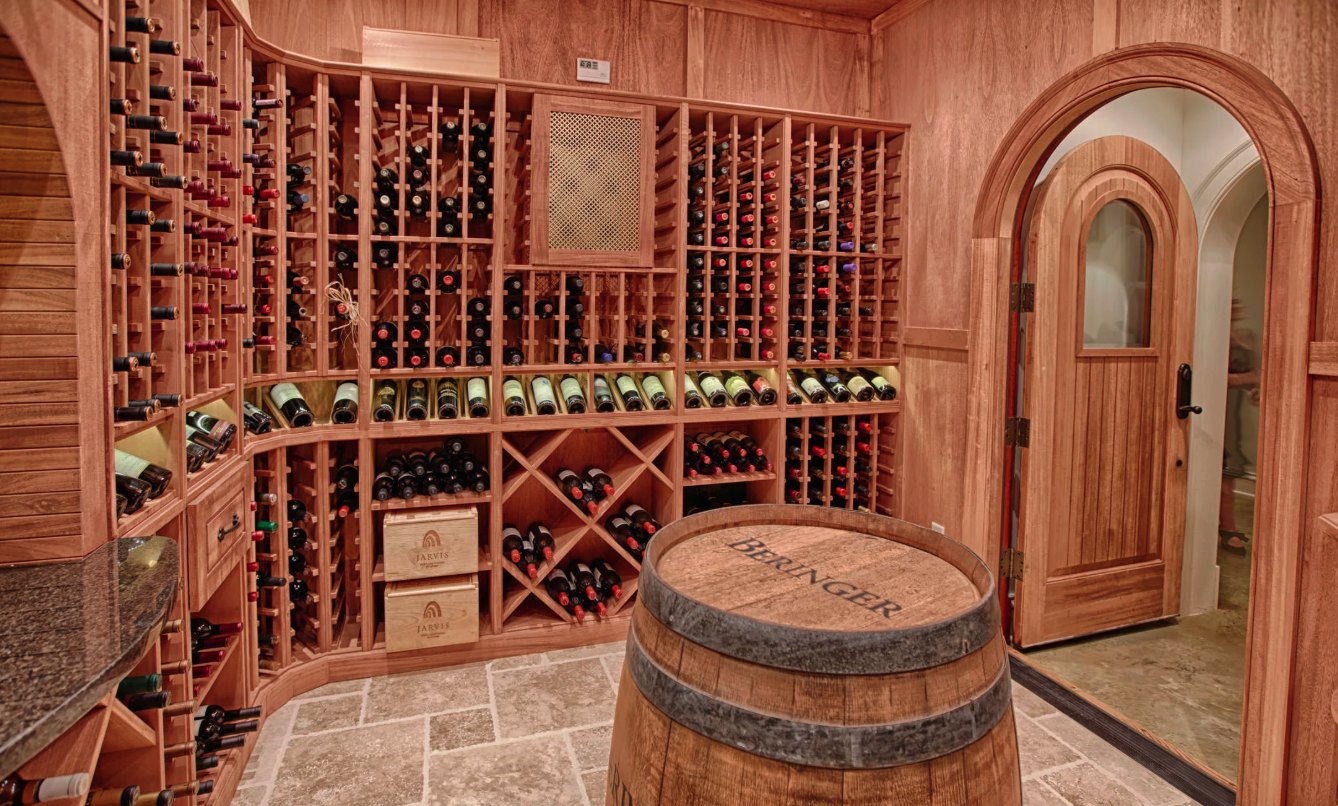
Walk-in wine cellar with wood racking, a stone floor, an arched wooden door and a barrel tasting table
Doylestown & Central Bucks

Wine cellars that hold steady in Central Bucks basements

It is easy to assume an old stone basement is already a wine cellar. The fieldstone foundations under many Buckingham and Plumstead farmhouses and Doylestown Borough's historic homes do stay cooler than the rest of the house. But Pennsylvania basements swing with the seasons. They run warm and damp in July and dry in January when the heat is on, and that swing is hard on wine.

A real cellar needs a sealed, insulated envelope and dedicated cooling. In a stone basement, that means dealing with moisture in the walls first, then building an insulated room inside with a vapor barrier on the warm side. Done right, the room keeps the character of the stone where you want to see it and the climate stays where the wine needs it.

Newer homes in Doylestown Township and New Britain usually have poured basements, which are simpler to build in. Many people put the cellar off a finished lower level or next to a home bar so the collection is on view. Others prefer a glass-front cellar on the main floor near the dining room. We help you pick a location that suits both the wine and how you entertain, and we check that the cooling equipment has somewhere sensible to go.

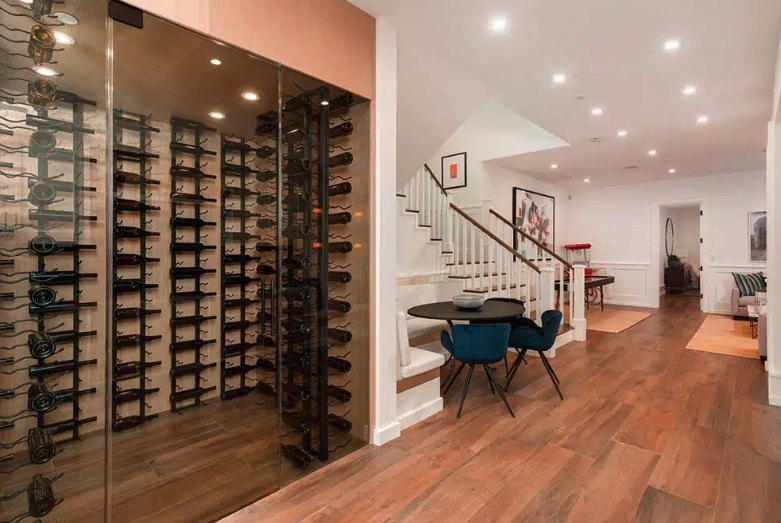
Glass-walled wine cellar with floor-to-ceiling metal racking in a finished basement
Engineered first

How we build a cellar that protects the wine

The right climate target

Long-term storage does best around 55 to 58 degrees with humidity between 50 and 70 percent. We design the room to hold those numbers year round, through humid summers and dry heating seasons, not just on the day it is finished.

Vapor barrier and insulation

A vapor barrier goes on the warm side of the walls and ceiling, with full insulation behind it. The door is exterior grade, insulated and sealed. Without this envelope, even good cooling equipment runs constantly and the walls can grow mold.

Cooling sized by heat load

A regular air conditioner is the wrong tool. We size dedicated cellar cooling from a heat-load calculation, then choose a self-contained, ducted or split system based on the room, noise and where the equipment can go.

Racking, glass and lighting

Racking in wood or metal is laid out around your bottle count and formats. Glass walls or doors are sealed into the envelope. Lighting is chosen so it does not heat the bottles, and a tasting table can be built in.

What's included

One contract covers the whole room.

  • Design consult and site and moisture assessment
  • Renderings, materials list and fixed, itemized quote
  • Vapor barrier and insulated walls and ceiling
  • Exterior-grade insulated and sealed cellar door
  • Dedicated cellar cooling sized from a heat-load calculation
  • Wood or metal racking laid out for your collection
  • Glass enclosure options and low-heat lighting
  • Tasting table or counter if wanted
  • Permits and inspections handled for most projects
What it costs

Typical investment for a wine cellar.

Cellar cost depends on the size of the room, the cooling system it needs and the racking and glass you choose.

Display wall or closet cellar

$15,000–$40,000

Roughly 200 to 500 bottles in a glass-fronted wall or converted closet with insulation, a vapor barrier and cooling.

Walk-in cellar

$40,000–$100,000

Roughly 500 to 1,500 bottles in a sealed, insulated room with ducted or split cooling and custom racking.

Collector's cellar and tasting room

$100,000–$250,000+

Large-capacity storage, case racking, a glass enclosure, a tasting area and inventory lighting.

These are typical industry ranges for finished projects in Pennsylvania, shown for planning only. They are not a quote. Your price depends on the size and condition of the space, the structural, electrical, plumbing and HVAC work it needs, the cabinetry and finish level you choose, and permit requirements. Racking material (stained wood, metal or acrylic), glass enclosures, the cooling system and door hardware make the biggest difference. Furniture, tasting tables and décor are not included unless they're listed in your quote. Every project gets a fixed, itemized quote after design.

Where we build

Serving Doylestown Borough, Doylestown Township, Buckingham, Plumstead and New Britain.

We design and build wine cellars throughout Doylestown Borough, Doylestown Township, Buckingham, Plumstead and New Britain. Whether the room sits inside a fieldstone foundation or a newer poured basement, we pull the permits and schedule inspections with your township for most projects, and one team handles the cellar from envelope to racking.

Doylestown BoroughDoylestown TownshipBuckinghamPlumsteadNew Britain

Common questions.

My stone basement stays cool. Do I really need cooling?

In most cases, yes. Stone basements around Doylestown stay cooler than the house, but they still drift warm and humid in summer and dry in winter. Wine does best when the temperature and humidity barely move. A sealed, insulated room with dedicated cooling holds the numbers year round. Without it, the cellar is only cool some of the time.

Can I keep the stone walls visible?

Often, on at least one wall. Fieldstone holds moisture, so we look at how damp the wall is and how it is built before deciding. Sometimes we can seal and feature one stone wall while insulating the others. Sometimes it is better to insulate everything and use stone as a finish. We will show you the options in the design.

Why not just use a regular air conditioner?

Regular air conditioners are built to cool people, not hold a room at 55 degrees. They dry the air too much and short-cycle at low temperatures. Dedicated cellar cooling is designed for this job. We size it from a heat-load calculation that accounts for the walls, glass, door and the space around the cellar.

Where should the cellar go in my house?

Usually the basement or lower level, because it starts out cooler and it is easier to build the envelope there. In newer homes in Doylestown Township and New Britain, a cellar off a finished lower level or next to a bar is a common fit. A main-floor glass cellar can work too, with more insulation and cooling.

Can the cellar be part of a larger bar or lounge project?

Yes. Many people pair a cellar with a home bar or a tasting area. We design them together so the cellar's envelope and cooling are kept separate from the bar's climate, and the glass, lighting and finishes tie the two rooms together. One contract and one team covers the whole space.

Tell us about the room you want.

A design consult takes about an hour at your home. You'll leave with a clear answer on what fits, what it involves, and what it costs.

Consults by appointment, weekdays and Saturday mornings