Southern York County
Wine Cellar · Southern York

Home wine cellars in Southern York County.

A wine cellar is a climate problem before it is a design project. We build the envelope and cooling to hold your bottles steady, then finish the room so you want to spend time in it.

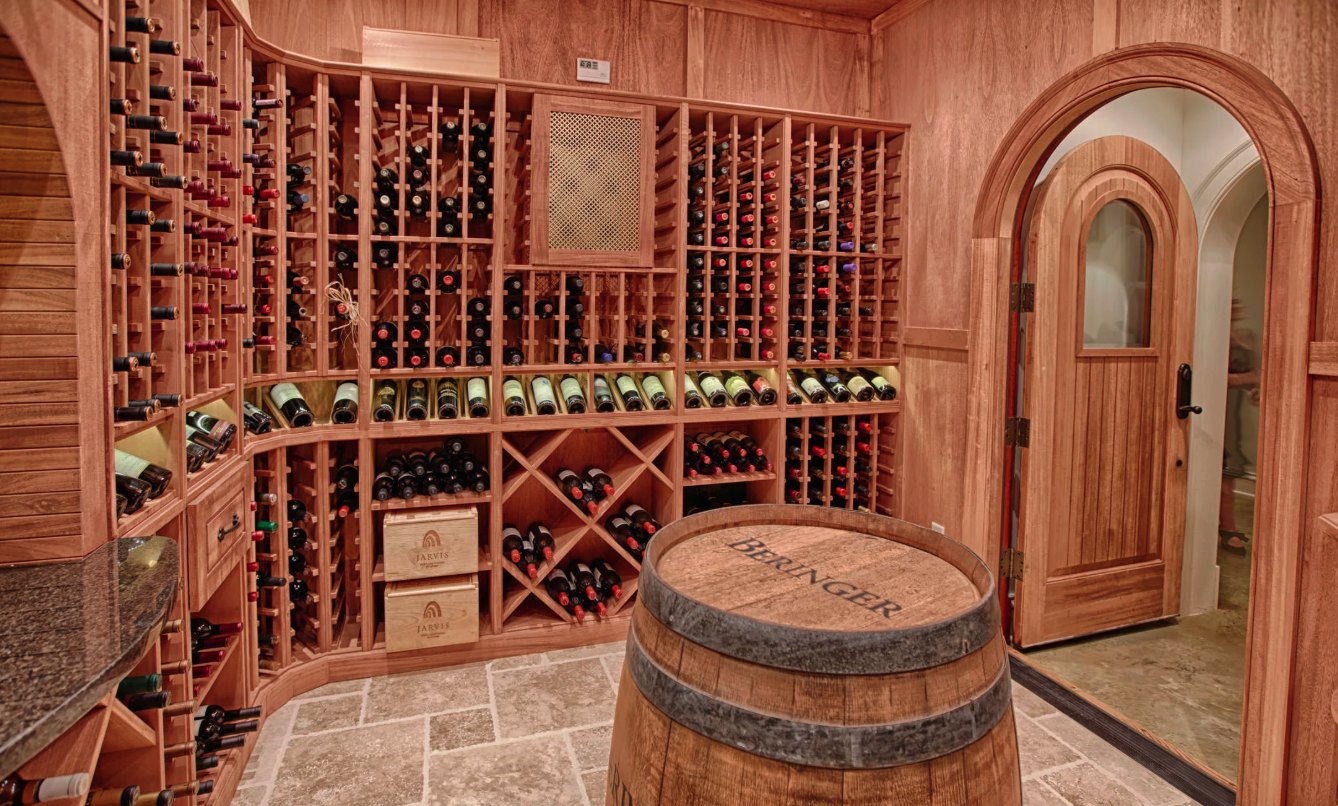
Walk-in wine cellar with wood racking, a stone floor, an arched wooden door and a barrel tasting table
Southern York County

Cellars for York County basements

Basements in southern York County are not naturally wine cellars, even when they feel cool. They run damp and warm through the summer and dry out once the heat comes on in winter. Wine wants about 55 to 58 degrees and 50 to 70 percent humidity every day of the year. Getting there takes a sealed, insulated room with its own cooling, not a corner that happens to be chilly. We design the climate first and the look second, because a beautiful room that cannot hold temperature is just storage.

The houses here give us a range of starting points. Older homes near Elmwood and the hospital may have stone or block foundation walls that wick moisture. Newer basements in York Township, Springettsbury and Springfield usually have poured walls and room to frame a proper cellar. Out in Hopewell and Shrewsbury, walkout lower levels and larger lots can make venting a cooling unit simple.

Your cellar should fit how you collect. Some people want a tight room behind glass off the family room to hold a few hundred bottles. Others want space for cases, a tasting table and room for friends coming up from Maryland on a weekend. We design around your bottles, how fast you drink them, and how you want the room to look. Then we build it once, the right way.

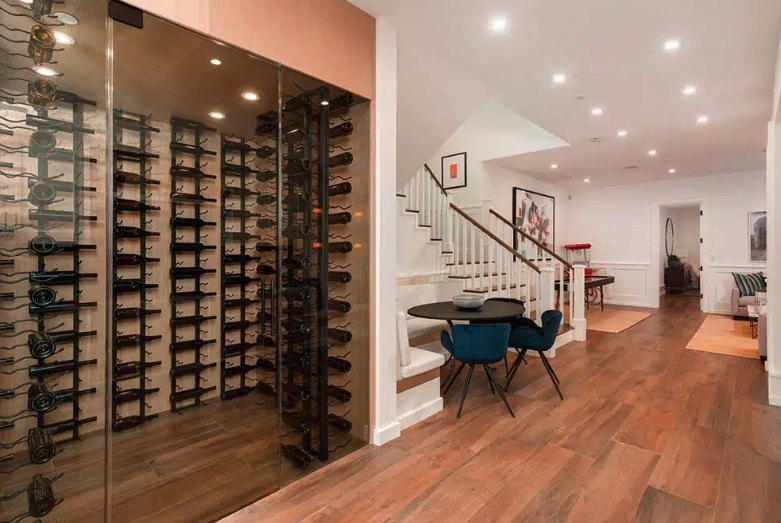
Glass-walled wine cellar with floor-to-ceiling metal racking in a finished basement
Engineered first

What keeps a cellar steady

Vapor barrier, warm side

The vapor barrier goes on the warm side of the insulation so moisture from the house cannot condense inside the walls. Get this backwards and the walls grow mold. We seal walls and ceiling as one continuous envelope before anything is finished.

Insulation and sealed door

Insulated walls and ceiling and an exterior-grade insulated door with real seals keep the cold in. An interior door with a gap at the bottom will let the cooling unit run all day and never quite hold temperature.

Cooling sized by load

We size dedicated cellar cooling from a heat-load calculation of the room. Self-contained, ducted or split systems each fit different houses. A regular air conditioner is not built for these temperatures and strips humidity the corks need.

Racking, glass and light

Wood or metal racking laid out for your bottles and cases. Glass walls or doors that are sealed and insulated. LED lighting that shows off the collection without warming it. A tasting table if the room has space.

What's included

One contract covers the whole room.

  • Design consult and bottle-count planning
  • Heat-load calculation for the room
  • Vapor barrier and insulated walls and ceiling
  • Exterior-grade insulated, sealed door
  • Dedicated cellar cooling system
  • Wood or metal racking
  • Glass enclosure options
  • Low-heat LED lighting
  • Permits and inspections for most projects
What it costs

Typical investment for a wine cellar.

Cellar cost depends on size, the cooling system, racking and glass. These ranges help you plan before we write your fixed, itemized quote.

Display wall or closet cellar

$15,000–$40,000

Roughly 200 to 500 bottles in a glass-fronted wall or converted closet with insulation, a vapor barrier and cooling.

Walk-in cellar

$40,000–$100,000

Roughly 500 to 1,500 bottles in a sealed, insulated room with ducted or split cooling and custom racking.

Collector's cellar and tasting room

$100,000–$250,000+

Large-capacity storage, case racking, a glass enclosure, a tasting area and inventory lighting.

These are typical industry ranges for finished projects in Pennsylvania, shown for planning only. They are not a quote. Your price depends on the size and condition of the space, the structural, electrical, plumbing and HVAC work it needs, the cabinetry and finish level you choose, and permit requirements. Racking material (stained wood, metal or acrylic), glass enclosures, the cooling system and door hardware make the biggest difference. Furniture, tasting tables and décor are not included unless they're listed in your quote. Every project gets a fixed, itemized quote after design.

Where we build

Serving Spring Garden Township, York Township, Springettsbury, Shrewsbury, Springfield and Hopewell.

We design and build wine cellars in Spring Garden Township, York Township, Springettsbury, Shrewsbury, Springfield and Hopewell, from older foundations near the city to newer lower levels along I-83. We pull the permits and schedule inspections with your township for most projects, and we keep the schedule on the dates we set.

Spring Garden TownshipYork TownshipSpringettsburyShrewsburySpringfieldHopewell

Common questions.

My basement already stays cool. Do I need cooling?

Almost always. A basement that feels cool in spring can climb into the high sixties or seventies in a York County summer and swing again in winter. Those swings age wine faster and push corks around. A dedicated cooling unit holds the room steady, and the insulation and vapor barrier keep it from working overtime.

Can you build a cellar in an older stone foundation?

Often, yes, but it takes more care. Stone and older block walls in Spring Garden Township and the older boroughs can carry moisture. We look for water problems first and handle them before we frame. Then we build an insulated, vapor-sealed room inside the foundation so the cellar is not depending on the old wall.

Where does the cooling unit vent?

That depends on the system. Self-contained units exhaust heat into an adjacent space that can absorb it. Ducted and split systems move the noise and heat farther away, often outside. Walkout basements in Springfield, Hopewell and Shrewsbury make that easier. We pick the system after the heat-load calculation and a look at your house.

How many bottles should I plan for?

Plan for where your collection is headed, not just where it is today. We usually suggest room to grow, since adding racking later means opening the envelope. At the consult we talk about what you buy, how long you hold it, and whether you buy by the case, then lay out racking to match.

Can a cellar be a room we actually sit in?

Yes. Many people want a tasting table inside the cellar or a glass wall into a lounge or family room. The cellar side stays at cellar temperature, so for longer evenings we often design a comfortable room next to it with a view of the bottles. We keep the glass sealed and insulated so the climate stays steady.

Tell us about the room you want.

A design consult takes about an hour at your home. You'll leave with a clear answer on what fits, what it involves, and what it costs.

Consults by appointment, weekdays and Saturday mornings