West Shore (Mechanicsburg & Camp Hill)
Wine Cellar · West Shore

Wine cellars on the West Shore.

Pennsylvania basements are warm and damp in summer and cool and dry in winter. We build wine cellars in West Shore homes that hold steady all year, with the vapor barrier, insulation and dedicated cooling a collection needs.

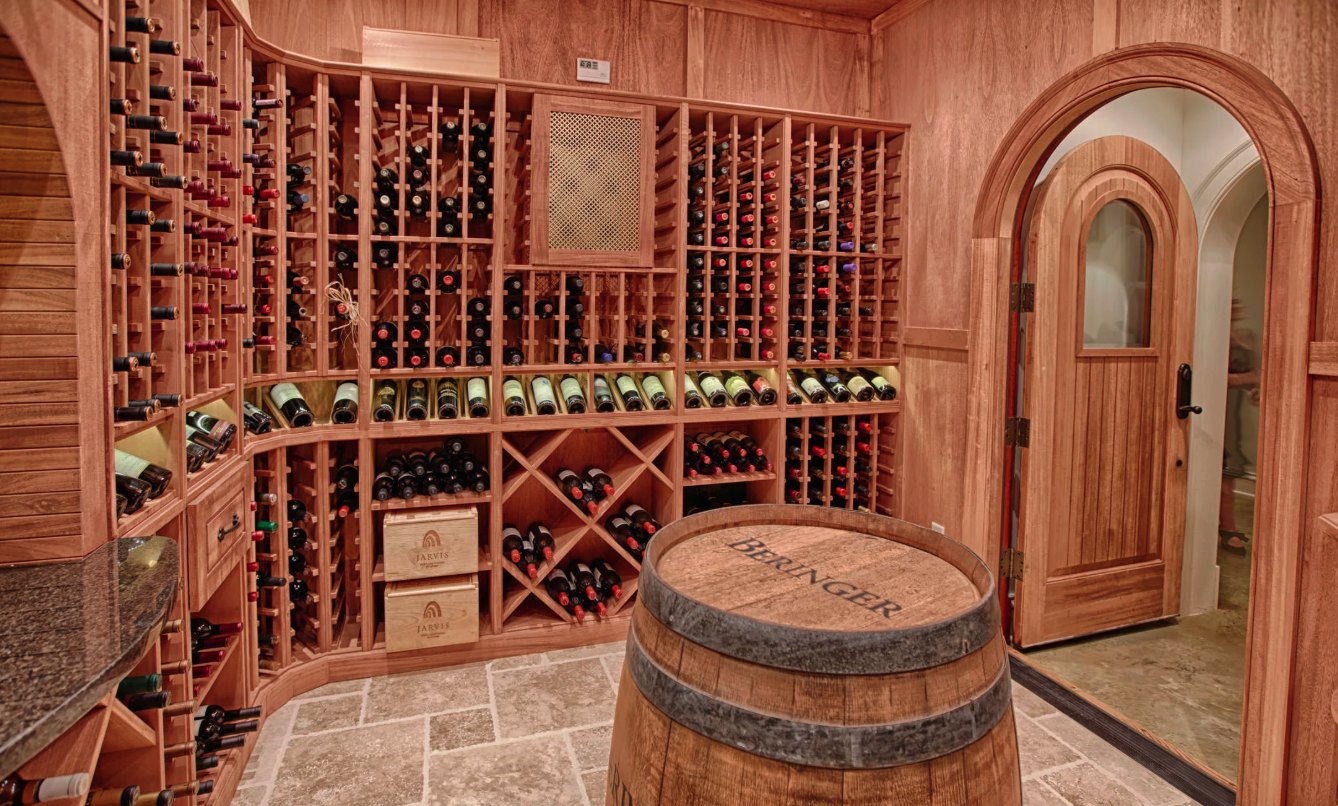
Walk-in wine cellar with wood racking, a stone floor, an arched wooden door and a barrel tasting table
West Shore (Mechanicsburg & Camp Hill)

Cellars for older foundations and newer basements

The West Shore has two kinds of basements. In Camp Hill and Mechanicsburg, many homes sit on older block or stone foundations, some going back before the war and some to the 19th century. In Hampden Township, Silver Spring and parts of Upper Allen, basements are newer, poured and often taller. Both can hold a wine cellar. They just need different approaches to moisture and insulation.

Older foundations breathe. Moisture moves through stone and block, and a cellar built against those walls without the right vapor barrier and insulation will fight condensation and mold. We assess the walls first, address water where needed and put the vapor barrier on the warm side of the assembly. Then the cellar holds its numbers instead of chasing the season.

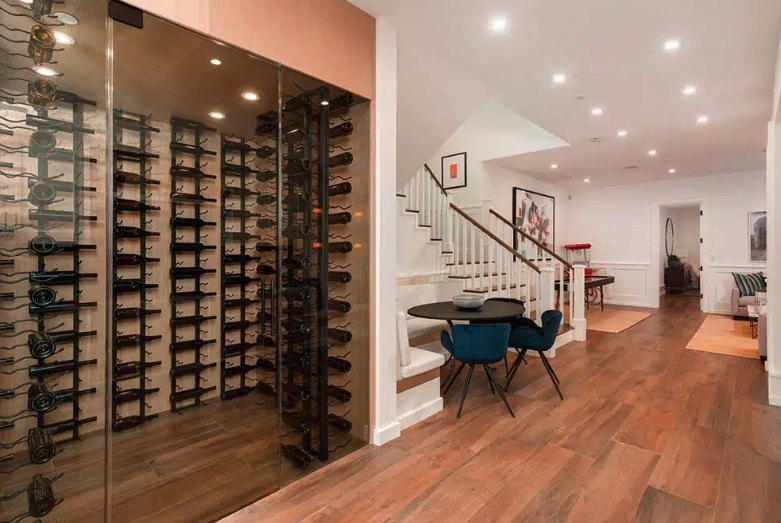
Newer basements are drier but often bigger and more open, so the cellar has to be closed off and insulated as its own room. Some people want a walk-in with a tasting table. Others want a glass-front wine room off a finished lower level or a great room. We design around how you collect, how much you keep and how you want to show it.

Glass-walled wine cellar with floor-to-ceiling metal racking in a finished basement
Engineered first

How a cellar holds steady

Vapor barrier and insulation

The vapor barrier goes on the warm side of the walls and ceiling so moisture does not condense inside them. Insulated walls and ceiling keep the cooling load down. This step matters most in older West Shore foundations that pass moisture through block and stone.

Dedicated cellar cooling

A regular air conditioner dries the air and cycles wrong for wine. We size a dedicated cellar unit from a heat-load calculation, then choose self-contained, ducted or split based on where heat can go and how quiet the room needs to be.

Temperature and humidity targets

Long-term storage does best around 55 to 58 degrees and 50 to 70 percent humidity. We design the room to hold that range steadily. Small, slow changes are fine. Big seasonal swings are what age wine too fast and dry out corks.

Door, glass and lighting

An exterior-grade insulated door with a tight seal keeps the room closed off. Glass enclosures need the right glazing to avoid sweating. Lighting stays low-heat, often LED on a dimmer, so it shows off the labels and racking without warming the bottles.

What's included

One contract covers the whole room.

  • Foundation and moisture assessment
  • Vapor barrier on the warm side of the assembly
  • Insulated walls and ceiling
  • Heat-load calculation and dedicated cellar cooling
  • Exterior-grade insulated, sealed door
  • Wood or metal racking sized to your collection
  • Optional glass enclosure and tasting table
  • Low-heat display lighting
  • Permits and inspections for most projects
What it costs

Typical investment for a wine cellar.

Cellar costs depend on size, the cooling system and the racking and glass you choose. Your fixed, itemized quote lists each one so nothing is a surprise.

Display wall or closet cellar

$15,000–$40,000

Roughly 200 to 500 bottles in a glass-fronted wall or converted closet with insulation, a vapor barrier and cooling.

Walk-in cellar

$40,000–$100,000

Roughly 500 to 1,500 bottles in a sealed, insulated room with ducted or split cooling and custom racking.

Collector's cellar and tasting room

$100,000–$250,000+

Large-capacity storage, case racking, a glass enclosure, a tasting area and inventory lighting.

These are typical industry ranges for finished projects in Pennsylvania, shown for planning only. They are not a quote. Your price depends on the size and condition of the space, the structural, electrical, plumbing and HVAC work it needs, the cabinetry and finish level you choose, and permit requirements. Racking material (stained wood, metal or acrylic), glass enclosures, the cooling system and door hardware make the biggest difference. Furniture, tasting tables and décor are not included unless they're listed in your quote. Every project gets a fixed, itemized quote after design.

Where we build

Serving Camp Hill, Mechanicsburg, Hampden Township, Lower Allen, Upper Allen and Silver Spring.

We build wine cellars and wine rooms across Hampden Township, Camp Hill, Lower Allen, Upper Allen, Mechanicsburg and Silver Spring. Cooling, electrical and construction work is coordinated with your township. For most projects, we pull the permits and schedule inspections with the township as part of the build.

Hampden TownshipCamp HillLower AllenUpper AllenMechanicsburgSilver Spring

Common questions.

Can I build a wine cellar in an older Camp Hill or Mechanicsburg basement?

Yes. Older stone and block foundations let moisture through, so we look at the walls before anything else. That may mean addressing water on the outside or inside, then building an insulated room with a vapor barrier on the warm side. Done in that order, an older basement can hold a cellar as steadily as a new one.

Why not just use a window air conditioner?

A standard air conditioner is built to cool people, not wine. It pulls too much moisture out of the air, cycles in ways that cause temperature swings and is not meant to run at cellar temperatures. A dedicated cellar unit is sized from a heat-load calculation and designed to hold both temperature and humidity in range.

How big should my cellar be?

Size follows your collection and how it grows. We ask how many bottles you keep now, how fast you buy and whether you want space for cases, large formats or a tasting table. Many newer Hampden Township and Silver Spring basements have room for a walk-in. A smaller wine room can work well in a tighter older home.

Can a wine cellar have glass walls?

Yes. Glass enclosures are popular because they let you see the collection from a finished basement or great room. The glass has to be insulated and sealed properly, and the cooling system has to account for it in the heat-load calculation. Otherwise the glass sweats and the unit runs too hard.

Will a cellar unit be noisy?

It depends on the type. Self-contained units are the simplest but put some sound and heat near the cellar. Ducted and split systems move the noisy parts elsewhere, like a utility room or outside. We pick the system based on where heat can be exhausted and how close the cellar sits to living space.

Tell us about the room you want.

A design consult takes about an hour at your home. You'll leave with a clear answer on what fits, what it involves, and what it costs.

Consults by appointment, weekdays and Saturday mornings